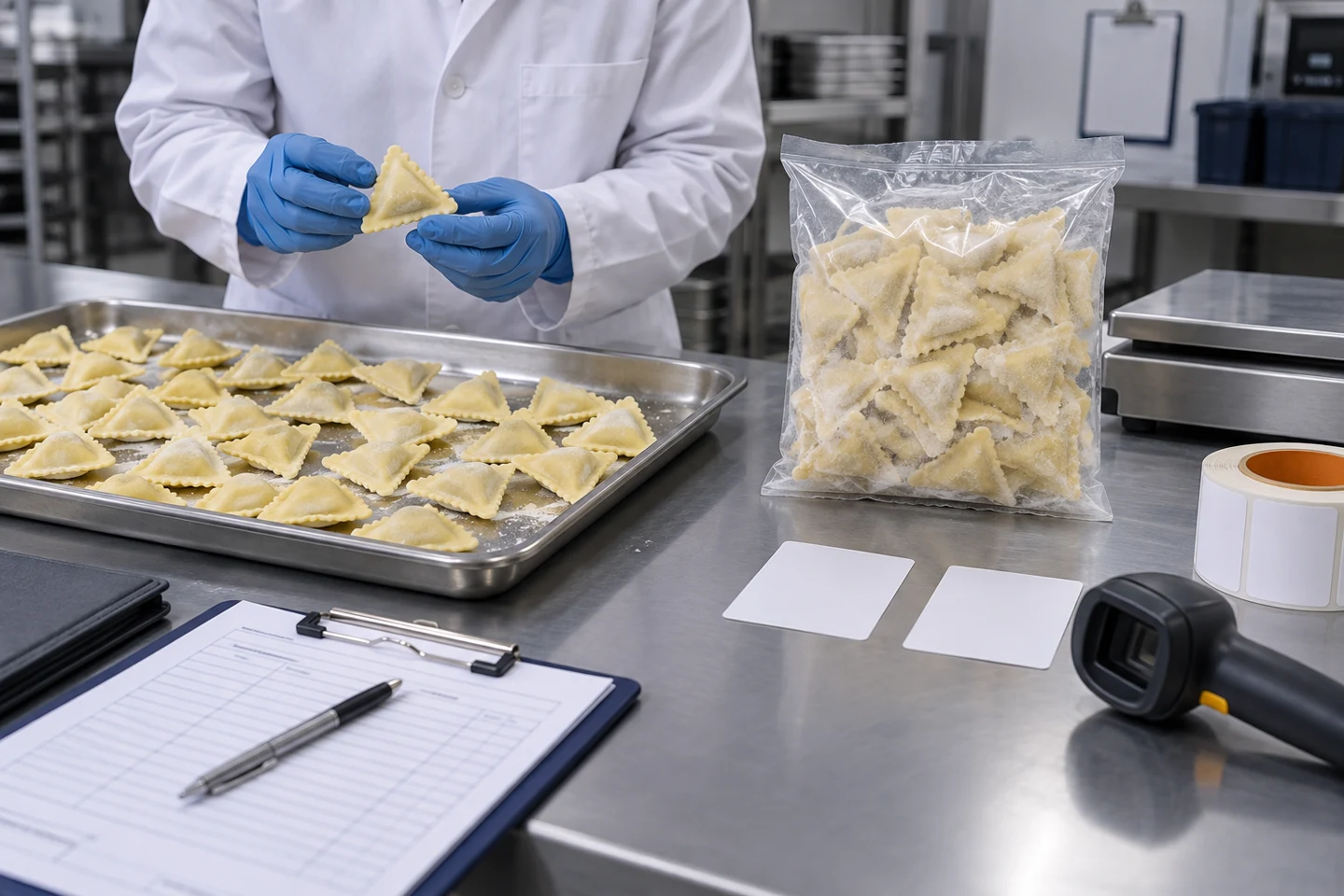
What The Signal Actually Says
On September 24, Deano's Pasta announced a recall of approximately 20 lb of frozen Pear and Pecorino Triangoli Ravioli because it could contain undeclared lobster. The one-pound bags were distributed to Massachusetts retail stores between August 10 and September 22, 2026. Listed lots are 090126126, 082526126, 081826126 and 073126126.[1]
The company said a customer complaint prompted an internal audit that found lobster-containing product in packaging that did not disclose the allergen; its investigation indicated a temporary production and packaging breakdown. No illnesses were reported at the announcement. FDA hosts this company notice as a public service and does not endorse the product or company.[1]
The Operating Boundary
The control boundary is not artwork approval alone. The reviewed ingredient list can be correct for one SKU while the physical product packed under it is different. A retained label without a matching production and packing record leaves that distinction unresolved.
This case gives a buyer a specific handoff to verify: the product identity at the packer, the packaging identity issued to the line, and the lot released to distribution. These are practical checks, not a claim that the same breakdown exists at any other supplier.
What To Check Now
- Can the released lot be matched to the actual filling or product identity, not just the planned recipe?
- Which packaging version and allergen declaration were issued, reconciled and retained for that packing run?
- After a product change or line interruption, what record confirms the product-pack pairing before restart?
- Do warehouse and customer records retain the lot identity needed to find the affected bags, and who owns escalation if the pairing cannot be proved?
Verify The Pairing, Not Just The Artwork.
A focused briefing can connect product identity, packaging issuance and the released lot so an approved label is not mistaken for a verified pack.
Request Briefing